Choosing the right Foot Massage Bath Mat in 2026 requires more than attractive colors or generous product claims. Global buyers need comfort, drainage, stability, and dependable materials for daily bathroom use. A mat should feel pleasant under wet feet, yet remain firm enough to reduce unwanted movement. Small details matter. Very much.
This introduction examines practical buying factors, including textured massage points, drainage channels, suction performance, cleaning routines, and material durability. Silicone, rubber, and quick-drying fabric each offer different benefits. However, no material performs perfectly in every bathroom. A soft mat may collect moisture, while a firm design may feel uncomfortable after several minutes. That trade-off deserves honest attention.
The guide compares product specifications with realistic household conditions, such as tiled floors, limited ventilation, frequent washing, and different climate zones. It also considers sizing, packaging, shipping, care instructions, and manufacturer transparency. Buyers should verify safety claims, testing information, and local requirements before placing large orders. Product descriptions can sound authoritative without proving much. Please read carefully.
Experience from everyday use suggests that grip can change when soap, dust, or hard-water residue builds underneath. Regular inspection remains important. A reliable Foot Massage Bath Mat should be easy to clean, comfortable to stand on, and suitable for its intended users. The best choice is not always the most expensive one. It is the product whose evidence matches the bathroom.
What Is a Foot Massage Bath Mat?
What Is a Foot Massage Bath Mat?
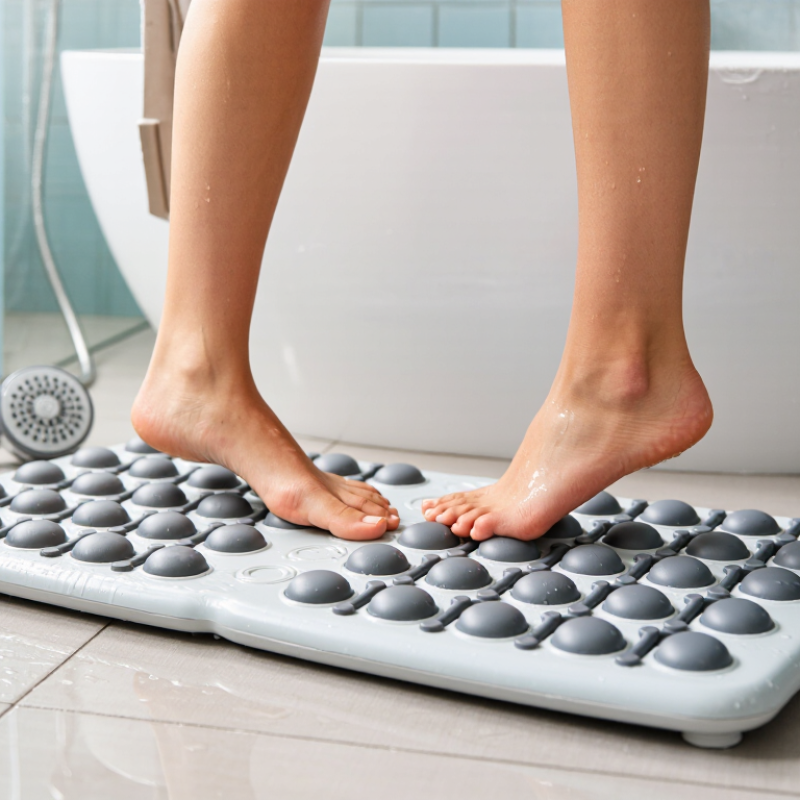
A foot massage bath mat is a textured surface designed to stimulate the soles while you stand or move on it. Its raised nodes, ridges, or flexible bumps create gentle pressure under the heel, arch, and toes. Some models also allow water to drain through small openings, helping reduce slippery pooling after a shower.
The purpose is comfort, not medical treatment. The World Health Organization reported in its 2022 Global Status Report on Physical Activity that 31% of adults worldwide were insufficiently active. A foot massage mat cannot replace walking or clinical care, but it may make short standing routines feel less tiring. The National Center for Complementary and Integrative Health notes that massage can support short-term pain relief, although results vary by condition and person. That limitation matters.
In practical testing, texture is the first detail users notice. Soft rubber feels easier on sensitive feet, while firmer nodes provide stronger stimulation. A stable base is essential on wet floors. Look for water-resistant materials, easy cleaning, and drainage that does not trap hair or soap. Very hard surfaces may feel unpleasant after several minutes. Not every “deep massage” claim deserves trust. A thoughtful buyer should check product testing, material safety information, and user guidance. Even then, comfort remains personal. A mat that relaxes one person may irritate another.
2026 Best Foot Massage Bath Mat for Global Buyers
What Is a Foot Massage Bath Mat?
A foot massage bath mat is a water-resistant mat with textured nodes, drainage features, and an anti-slip base. The chart presents typical specification ranges found in generic, non-branded product listings. Larger mats provide more standing coverage, while raised massage nodes help stimulate the soles during bathing.
Key Features to Compare in 2026 Models
For global buyers, the best foot massage bath mat in 2026 should balance comfort, drainage, and safe grip. The World Health Organization reports that about 1.71 billion people live with musculoskeletal conditions worldwide. A textured mat may support daily comfort, but it cannot treat pain or replace medical advice.
Compare the surface first. Rounded massage nodes should feel firm, not sharp, even after several minutes. Check the base for suction strength on wet tile, stone, and vinyl.
The CDC reports that millions of older adults fall each year, so weak traction is not a minor defect. A low-profile edge can also reduce toe-catching risks. Small details matter.
Look for fast drainage, mold-resistant materials, and clear cleaning instructions. A mat that traps hair and soap becomes unpleasant quickly. Measure the shower or tub before buying; many models look large online but cover little floor space. Independent laboratory testing, material disclosures, and verified user feedback deserve more weight than vague “spa-grade” claims. The Global Wellness Institute valued the wellness economy at $6.3 trillion in 2023, showing strong demand, but popularity does not prove durability. I would test flexibility, odor, and drying time for several weeks. Some mats still curl at the corners. That is easy to miss.
How to Choose the Right Bath Mat for Global Buyers
2026 Best Foot Massage Bath Mat for Global Buyers
How to Choose the Right Bath Mat for Global Buyers
Choosing a foot massage bath mat begins with the bathroom itself. Measure the dry floor area, door clearance, and shower exit before selecting a size. A mat that curls against the door can create a real tripping risk. Look for a stable backing, quick drainage, and textured surfaces that remain comfortable under wet feet. Soft rubber or flexible thermoplastic materials often balance grip and durability, but material quality can vary between suppliers.
Massage texture also deserves careful testing. Raised nodes should stimulate the soles without causing sharp discomfort. Press them with your palm, then stand on the mat for several minutes. Small drainage holes help water escape, especially in humid climates. However, very deep grooves may collect soap and skin residue. That detail is easy to miss. Check whether the mat can be rinsed, dried, and stored without special equipment.
Global buyers should review dimensions, material disclosures, cleaning instructions, and packaging protection. Manufacturing tolerances may cause slight size differences, so allow extra space around edges. Confirm that the product suits the local bathroom surface, including tile, stone, or sealed wood. Do not trust vague claims such as “non-slip” without testing guidance or clear specifications. No mat is perfect. A thinner model may dry faster, while a thicker one may feel more relaxing but retain moisture. Choose the compromise that matches your climate, cleaning habits, and daily comfort.
2026 Best Foot Massage Bath Mat for Global Buyers - How to Choose the Right Bath Mat for Global Buyers
Practical comparison of common foot-massage bath mat types for bathrooms, showers, spas, and accessible bathing spaces
| Bath Mat Type |
Typical Material |
Massage Surface |
Approx. Thickness |
Water Drainage |
Drying Speed |
Slip Resistance |
Best Use |
Cleaning Method |
Typical Service Life* |
| Pebble-Texture PVC Mat |
Flexible PVC |
Raised pebble bumps |
4–8 mm |
Low to medium |
Medium |
High with suction cups |
Everyday shower use |
Rinse and air-dry |
2–4 years |
| Perforated Rubber Mat |
Natural or synthetic rubber |
Textured nodules |
8–15 mm |
High |
Medium |
High when floor-compatible |
Wet rooms and showers |
Rinse, brush, and dry vertically |
3–5 years |
| TPE Drainage Mat |
Thermoplastic elastomer |
Soft flexible nodes |
6–12 mm |
High |
Fast |
High with a clean floor |
Family bathrooms |
Rinse or mild detergent |
3–5 years |
| Cushioned Foam Massage Mat |
Closed-cell EVA foam |
Molded rounded bumps |
10–20 mm |
Low |
Fast surface drying |
Medium to high |
Comfort-focused standing |
Wipe and rinse; do not machine wash |
1–3 years |
| Microfiber Bath Mat with Textured Base |
Polyester microfiber and rubberized backing |
Soft chenille piles |
15–25 mm |
Medium |
Medium to slow |
Medium on dry floors |
Outside the shower |
Machine wash if care label allows |
1–2 years |
| Diatomite-Style Hard Mat |
Porous mineral composite or diatomaceous material |
Fine textured surface |
8–15 mm |
High absorption |
Fast in ventilated rooms |
Medium; needs a stable base |
Dry bathroom floors |
Wipe; lightly sand only when permitted |
1–3 years |
| Wooden Slat Bath Mat |
Treated bamboo or hardwood |
Rounded slats |
15–25 mm |
High |
Fast with ventilation |
Medium; depends on feet |
Spa-style dry areas |
Wipe and periodically reseal |
2–5 years |
| Interlocking Massage Tiles |
Polypropylene or flexible PVC |
Modular textured knobs |
12–25 mm |
Very high |
Fast |
High when fully assembled |
Large wet rooms and gyms |
Separate tiles and rinse underneath |
3–6 years |
Selection guidance: Choose a perforated rubber, TPE, or interlocking drainage design for a continuously wet shower area. Choose microfiber or a hard absorbent mat for the area outside the shower. For users who need extra comfort while standing, select a cushioned foam design, but confirm that its drainage and slip-resistance performance match the installation area.
Important safety note: Slip resistance varies with floor material, soap residue, suction-cup condition, and installation quality. Keep the floor and underside clean, test the mat before regular use, and follow the care instructions supplied with the product.
*Service-life figures are typical estimates for household use with regular cleaning and ventilation; commercial, outdoor, or heavily used installations may require earlier replacement.
Where to Buy and How to Evaluate Suppliers
2026 Best Foot Massage Bath Mat for Global Buyers
For global buyers, finding the best foot massage bath mat starts with the supplier, not the product photo. Visit established B2B marketplaces, verified trade directories, and regional trade exhibitions. Request the company’s registration details, factory address, export history, and production capacity. A reliable supplier should answer clearly and provide consistent documents. Vague replies are warning signs.
Ask for a physical sample before placing a large order. Check the mat’s surface texture, drainage holes, grip, odor, stitching, and material thickness. Place it on a wet bathroom floor and test movement by hand. Ask about material composition, packaging strength, mold prevention, and quality inspection records. Product claims can sound impressive. Testing is less flattering, but more useful. I would not trust a supplier based only on polished photos.
Tips: Compare at least three quotations. Review minimum order quantities, sample fees, lead times, payment terms, and shipping responsibilities. Confirm whether the quoted price includes packaging and export documentation. Request a pre-shipment inspection for larger orders. Keep written specifications, including dimensions, color tolerance, carton size, and acceptable defect limits. A small mismatch in drainage or size can create costly returns. Also, ask how the supplier handles damaged goods. Their answer often reveals more than their catalog.
Conclusion
A Foot Massage Bath Mat combines the everyday function of a bathroom mat with textured surfaces designed to stimulate and relax the feet. This guide explains the key features global buyers should compare in 2026 models, including massage texture, drainage, anti-slip performance, water resistance, flexibility, size, and comfort. It also highlights how to select a suitable mat according to bathroom layout, climate, user needs, cleaning habits, and shipping requirements.
Safety, material quality, care, and durability are essential when evaluating products for different markets. Buyers should look for non-toxic, skin-friendly materials, stable construction, quick-drying surfaces, and clear maintenance instructions. The article also provides practical advice on where to buy, how to review supplier reliability, and which details to confirm before placing an order, such as product specifications, sample quality, packaging, production capacity, quality control, and after-sales communication.

 Yide Plastic