China Top 10 Safety Bath Mat Suppliers for Global Buyers

Time:2026-10-09 Author:Madeline
0%

A wet bathroom floor can turn a normal morning into a painful fall. A reliable Safety Bath Mat helps reduce that risk with textured surfaces, strong suction cups, and quick drainage. For global buyers, choosing the right Chinese supplier requires more than comparing catalog photos or low prices.

This guide introduces ten China-based Safety Bath Mat suppliers for importers, distributors, hotel groups, and retail brands. The evaluation focuses on material quality, grip performance, drainage design, mold resistance, production capacity, and customization options. We also consider factory experience, communication, packaging, sample support, and export readiness. Small details matter. A mat that curls at the edge may create a trip hazard. Weak suction cups may release on smooth tiles. Unclear testing records should invite questions.

Practical verification remains essential. Buyers should request samples, inspect the underside, test the mat on different surfaces, and review current product documentation. Supplier claims can change. Online information may also be incomplete. This list is a useful starting point, not a final purchasing decision. Each company should be checked against your market’s safety expectations, packaging needs, order volume, and delivery schedule. Some suppliers may offer excellent customization but limited stock. Others may provide stable production but fewer design choices. That trade-off deserves honest attention. With careful communication and independent checks, global buyers can find a dependable partner and select a bath mat that performs beyond the showroom.
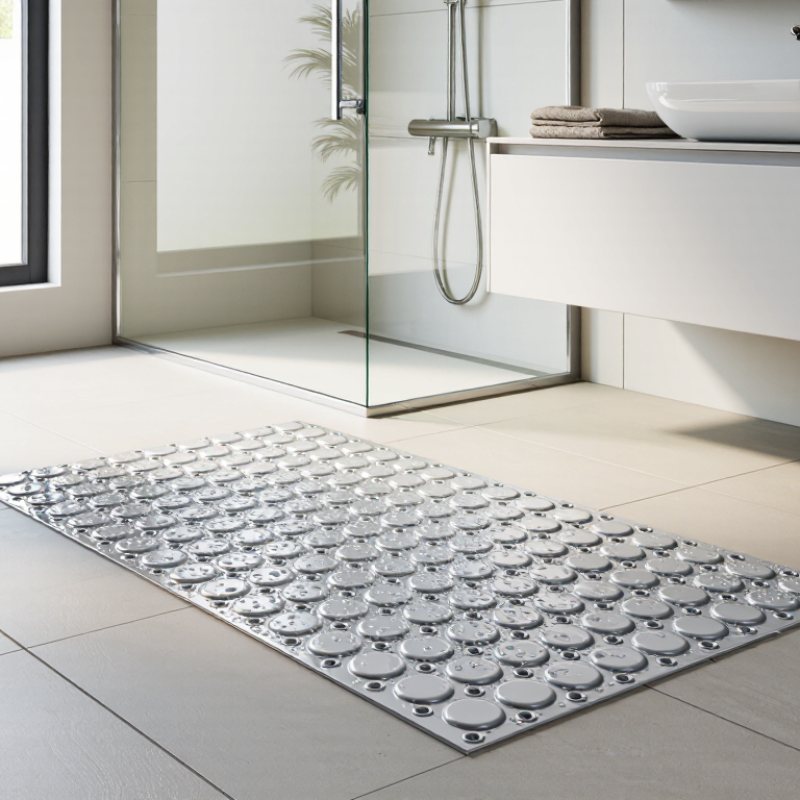
China Top 10 Safety Bath Mat Suppliers for Global Buyers

What Makes a Safety Bath Mat Supplier Reliable?

A reliable safety bath mat supplier understands that small details can affect a serious household risk. The World Health Organization reports about 684,000 fatal falls worldwide each year. It also estimates that 37.3 million falls require medical attention. These figures do not prove that a bath mat prevents every accident. They show why suppliers need evidence, not attractive packaging.

A dependable supplier should provide test results for slip resistance on wet surfaces. Ask which method was used, under what load, and with how much water. Independent laboratory reports are stronger than internal claims. The Centers for Disease Control and Prevention reports that more than 14 million older adults fall each year in the United States. For these users, a curled edge can matter as much as a weak grip. Reliable factories check backing adhesion, edge stability, drainage, colorfastness, and washing durability.

Look closely at production control. Does the supplier keep batch records? Can it provide pre-shipment inspection photos and material specifications? ISO 9001-based quality systems can improve consistency, but certification alone is not enough. A sample may perform well in a showroom and fail on a wet bathroom floor after repeated washing. That uncomfortable possibility deserves testing. Suppliers should disclose limitations, recommended floor types, cleaning instructions, and replacement guidance. They should also respond clearly when a buyer reports loose backing or mildew odor. Silence is a warning sign. Experience is useful, but documented proof remains more reliable.

How to Evaluate Chinese Bath Mat Manufacturers

China Top 10 Safety Bath Mat Suppliers for Global Buyers

How to Evaluate Chinese Bath Mat Manufacturers

China’s bath mat industry serves a growing home-textile market. Grand View Research estimated the global home-textile market at about US$133 billion in 2023. That scale creates options, but not automatic quality. Evaluate each manufacturer through samples, factory records, and testing evidence.

Ask for the exact fiber composition, backing material, weight, and production tolerances. A reliable supplier should explain how rubber, PVC, or thermoplastic backing performs on wet tiles. Request slip-resistance reports using recognized methods, such as DIN 51097 or EN 16165, where applicable. Check the laboratory name, test date, sample code, and tested surface. A certificate without traceable details proves little. Quite often, buyers miss this.

Inspect three production samples from different batches. Compare edge binding, odor, shedding, colorfastness, and backing adhesion after washing. A practical test is simple: place the mat on wet ceramic tile, then apply repeated foot pressure. Record movement and curling. It is not a laboratory substitute, but it reveals careless finishing. The ISO Survey 2023 reported more than one million ISO 9001 certificates worldwide; therefore, certification alone cannot distinguish a strong factory. Review corrective-action records, incoming-material controls, and pre-shipment inspection data. An honest manufacturer should also disclose failed tests and improvements, not only polished certificates.

China’s Top 10 Safety Bath Mat Suppliers for Global Buyers

China’s top 10 safety bath mat suppliers for global buyers are best judged by performance, not attractive catalogs. Reliable suppliers should explain their material choices, including PVC, TPE, rubber, or diatomaceous blends. They should provide clear data on slip resistance, drainage, odor control, and surface durability. Ask for laboratory reports and production samples.

A practical review should compare factory experience, quality systems, export capability, and customization support. Strong suppliers usually offer different sizes, drainage-hole patterns, textures, colors, and packaging options. They should also confirm minimum order quantities, sample timelines, carton details, and inspection procedures. Product edges matter. Poorly finished edges can curl after repeated washing.

During sourcing, test each sample on wet ceramic flooring. Check movement, drying speed, cleaning effort, and comfort under bare feet. Test it again after several weeks. Not every polished sample performs well. That is an easy mistake. Some suppliers may share incomplete test information, so buyers should request current documents and verify testing methods. Clear communication also reveals reliability. A professional supplier answers technical questions directly and records agreed specifications. China’s leading safety bath mat suppliers can support private-label projects, but buyers should avoid choosing only by price. A cheaper mat may develop odor, lose grip, or require earlier replacement. Supplier performance can vary between production batches, so independent inspection remains useful. Mistakes still happen. Careful verification reduces them.

Key Product, Quality, and Customization Factors

China Top 10 Safety Bath Mat Suppliers for Global Buyers

For global buyers, a safe bath mat is more than a soft surface. It must stay stable on wet floors and dry without trapping odor. Check the backing material, drainage design, edge binding, and surface texture. TPE, PVC, rubber, and microfiber each offer different comfort and durability. Ask suppliers for slip-resistance data under wet conditions. Do not rely on product photos alone. They can hide weak corners or uneven molding.

Quality control should cover raw materials, odor, colorfastness, and dimensional stability. A reliable supplier can provide inspection records, material information, and sample approval documents. Test samples on ceramic, stone, and textured floors. One pattern may work well in a showroom but slide in a real hotel bathroom.

Small details matter. Examine suction cups after repeated washing. Check whether the mat curls after storage. No supplier is flawless, and buyers should record defects instead of quietly accepting them.

Customization often includes size, color, logo placement, packaging, hole shape, and backing hardness. Share exact drawings, tolerance ranges, carton dimensions, and washing requirements before quotation. Request a pre-production sample, especially for custom molds or printed surfaces. Confirm minimum order quantities and replacement policies in writing. A low price may reflect thinner material, fewer inspections, or limited after-sales support. That trade-off is sometimes missed. Suppliers with experienced production teams can suggest practical changes, but buyers should still verify every change against the final use environment.

How to Choose and Import the Right Supplier

China Top 10 Safety Bath Mat Suppliers for Global Buyers

How to Choose and Import the Right Supplier

Choosing a safety bath mat supplier requires more than comparing prices. Check the mat’s material, drainage holes, suction cups, size, and surface texture. A reliable supplier should provide clear specifications and recent test reports. Ask whether the reports match the exact product, not a similar sample. During sourcing, request a physical sample. Place it on a wet tile and test its grip, odor, flexibility, and cleaning performance. Small details matter. A curling edge can create a real trip risk.

Tips: Confirm the minimum order quantity, sample cost, production time, packaging method, and payment terms in writing. Ask for photos of cartons, labels, and pallet loading. Verify the supplier’s factory address and quality-control process. A video call can help, but it cannot replace an independent inspection. Check destination-country requirements for materials, labeling, chemical safety, and import documents before placing an order. Shipping terms should clearly state responsibility for freight, insurance, customs, and delivery.

Do not choose a supplier only because it offers the lowest quotation. Very low pricing may reflect thinner material, weaker suction cups, or inconsistent production. I have found that one approved sample does not guarantee every later batch. That assumption needs questioning. Consider a pre-shipment inspection, especially for the first order. Keep written records of tolerances, color references, carton strength, and acceptable defect limits. Clear records make disagreements easier to manage.

FAQS

What materials are commonly used in safety bath mats?

Common materials include PVC, TPE, rubber, and diatomaceous blends. Each offers different comfort, drainage, odor control, and durability. Material choice matters.

How should buyers test a bath mat’s slip resistance?

Place the sample on wet ceramic flooring and press it with bare feet. Check movement, suction-cup stability, and edge lifting. Repeat the test after several weeks. A showroom test is not enough.

Which quality details deserve close inspection?

Examine drainage holes, surface texture, backing hardness, and edge finishing. Check for curling after washing and storage. Poor edges can create a trip risk. Small defects matter.

What documents should a supplier provide?

Request current laboratory reports, material information, inspection records, and sample approval documents. Confirm that reports match the exact product. Similar samples can mislead buyers.

What customization options are usually available?

Suppliers may customize size, color, hole patterns, textures, packaging, and logo placement. Provide drawings, tolerance ranges, and carton dimensions before receiving quotations. Request a pre-production sample for custom molds.

How can buyers compare supplier quality beyond price?

Compare factory experience, quality systems, export capability, and communication habits. Ask technical questions and record every agreed specification. A very low price may mean thinner material or weaker suction cups. Cheap is not always practical.

What should buyers confirm before importing?

Confirm minimum order quantity, sample cost, production time, payment terms, and packaging details. Check carton strength, labels, pallet loading, and shipping responsibilities. Review destination-country requirements for materials and import documents. Details get missed.

Is an approved sample enough for the whole order?

No. Production batches can vary, even after sample approval. Consider independent inspection before shipment, especially for the first order. Keep defect limits, color references, and tolerances in writing. That assumption needs questioning.

Conclusion

This guide introduces China’s top 10 Safety Bath Mat suppliers for global buyers and explains how to identify dependable manufacturing partners. It examines the qualities that make a supplier reliable, including stable production capacity, consistent material quality, transparent communication, responsible quality control, and experience with international orders. Buyers will also learn how to evaluate Chinese bath mat manufacturers by reviewing product specifications, factory capabilities, certifications, sampling procedures, packaging options, and delivery performance.

The article compares key product, quality, and customization factors such as slip resistance, water drainage, durability, comfort, size, color, surface design, and private-label packaging. It concludes with practical advice for selecting and importing the right supplier, including confirming minimum order quantities, negotiating clearly, inspecting samples, planning logistics, and maintaining quality standards throughout the order process. The goal is to help global buyers make informed sourcing decisions and build reliable, long-term cooperation with suitable Chinese manufacturers.


Madeline

Madeline

Madeline is a dedicated marketing professional with a wealth of expertise in our company's core offerings. With a keen understanding of the industry, she brings a unique perspective to her role, consistently delivering high-quality content that highlights the superior aspects of our products. As......